As the state of the world makes a real book tour impossible at present, Chris announces a virtual book tour for THE HEART HAS TO ACHE BEFORE IT LEARNS TO BEAT. Look for videos to be posted to Chris’s various social media accounts and elsewhere on the web!
Follow Chris’s official accounts on these social media platforms:
I will get to the title in a wee bit, it’s worth the wait (sort of). I first met Bill Rieflin very briefly at Southern Studios in 1987, the day I also met Al Jourgenson and Paul Barker. But it was not until later that year, in the summer when I was staying at Julia Nash’s apartment in rehearsals for the (Rieflin-titled) “YOU GODDAM SON OF A BITCH” double live album by the Revolting Cocks that our friendship began. He was at the kitchen table, and though we did not know each other, we started talking as if we were picking up a conversation we had finished earlier. It was about, of all things, the experimental band THIS HEAT. I just blithely assumed that everyone knew this band that I adored, and, well, it seems I was right. We even discussed THIS HEAT bootlegs, then moved on to more general matters, like JOHN GREAVES, bass player from HENRY COW, like you do…
I cannot say that I had no idea we would have a musical relationship that would stretch over three decades—I knew right then that we would. A deep, close friendship that was as easy as it was fun, goofy and inspiring.
In the context of Ministry and Revolting Cocks, Bill was vital: not only as a calm voice of reason, but as an innovator, a catalyst during impasse and a calming presence in the eye of a frequent storm. If it was not for him, I probably would have become a drug addict. He reminded me, without ever saying anything, that the CREATIVE part was always the FUN part, and if it did not seem like fun, we could make it fun. And he did, and we did. Bill taught me how to look at the creative process not as a lateral story with a beginning middle and end; he taught me to ask questions OF the process, he taught me dynamic, when to make it loud, and when to remain silent. He also knew how to bring humour into any given situation.
When we were in rehearsals for “THE MIND IS A TERRIBLE THING TO TASTE” in 1989, we were sitting at Paul Barker’s living room table as he patiently taught me the keyboards to the song “DEITY” which was part of the live set. Rewinding the cassette over and over, we became very curious about the opening line Al sings in the song (which is, in fact, “eyes open, empty as halos”, but we didn’t know that, and Al was not there to ask). We decided that the opening line was, in fact, “TOM & DONNY, HEAD FOR POTATOES”, thus, the creation of our alter egos: TOM & DONNY. We never really decided who was Tom and who was Donny; they were kind of a singular entity for any and all hi jinx that may ensue.
As time passed, it became clear that our musical partnership could not be contained simply within the confines of Ministry, The Cocks and the numerous other projects it spawned. Things started to gain more of a shape for us with my first solo album in 1990, “WHIPLASH BOYCHILD”, on which Bill contributed so much, but I think the defining moment was the song “THE LAST OF JOY” which started as a beautiful piano melody he had written, to which I wrote some words. It was Bill’s idea to put some “crackles” on it: scratchy record crackles… so we went to the local Salvation Army (on Halsted Street), bought the first 78 record we saw (polkas!) and took it back to the studio, playing this record that looked like it had been dragged across a construction site by a dog on the studio’s own VERY high-end turntable, all in the name of art, it sounded perfect. It was at this time that I introduced Bill to the music of SCOTT WALKER when I asked him to learn “The Amorous Humphrey Plugg” (from the album SCOTT 2) with a view to putting it on “Whiplash”. This would become an obsession for the two of us.
Bill was there to coach me through relationships, hardships and breakups; he never judged, he listened, his patience with me immeasurable. He taught me things about music theory to help me compose, he gave me more eureka moments than I can remember, he taught me to own what I did, be proud of how I created, and he also took ideas and cast them in his own brilliant light, yielding some of my proudest compositional co-writes.
The two works that stand out to me are SHIPWRECK and LARGO. Both very different records, but both an amazing adventure in creativity from beginning to end. SHIPWRECK was a band effort, though most of the compositions were mine, we booked two straight weeks for rehearsals and preproduction before setting foot in the studio. The work was hard, but it was not like a Ministry record; it never got frustrating. The days were long, but they were filled with what you wanted to be doing, and everyone walked out of that studio so proud of what we had done. That record still stands up today, and I still get amazing compliments about it.
LARGO was born out of SHIPWRECK in a way, if circuitously, after a disastrous tour for SHIPWRECK (not because of the band or the music, just stupid record company and booking agency crap, the usual). We scurried home to lick our wounds and I was at an impasse, the music business was changing, my record company was in decline because of the heartbreaking demise of its founder, Jim Nash. Bill invited me out to Seattle to write, and LARGO was born. Hilariously though, his intention, and ergo mine, was to make this brilliantly polished pop record… if you have heard LARGO, you will understand that whatever our intentions at the outset, this is not what happened. The title track clocks in at about 50 BPM and is around 8 minutes long, a sedate meditation of disquiet on guitar and piano. It was almost as if we were determined to anger any Ministry fans with no attention span as much as we could. But, as with everything, we had no intentions of anything; if we had set off to write a slapstick comedy script for a movie, then, LARGO would have come out the other end as it was: stoic, austere, challenging and beautiful.
We spent weeks in Bill’s parents’ house with an upright piano and my guitar. We made exquisite corpses with chords and with words: there were days when it was harder, there were days of ferocious creativity, but all these sounds seemed to grow organically through us from this absolute silence. We wrote the album and we would not record it for a while: I left it to Bill to mix, because it’s not my thing, and I KNEW that he KNEW that it would be incredible.
During the composition and the recording of this, I stayed with him and his wife, Francesca. These were wonderful times, games, talks, long dinners, long walks that almost persuaded me to move to Seattle.
Things changed for us: we both became involved in other projects, our friendship remained strong and involved. He would continue to help me out with my records here and there, and he would come passing through with bands he was playing with: KMFDM and then R.E.M. and eventually KING CRIMSON.
The hardest thing for me was how his illness made it progressively harder for him to play until he could not do it. We resolved, some time last year, that I would come out and we would write, unfortunately his fatigue from fighting and from chemo and his pain made this impossible. But we talked when he was up for it: we talked about the records we loved, we talked about MOTT THE HOOPLE and ROXY MUSIC. He still laughed, he still put on his silly voices and made me laugh, his sarcasm and cynicism were, as always, on point as was his love for me, and mine for him.
Bill recognized something in me and not only did he bring it out, but he embellished it, as I think I saw in him too. I LOVE that we got to make this beautiful music together, and I am so grateful that this happened in my life. I am heartbroken that I will not get to do it with him again, but I still have the gifts he gave me that I use in my creative process every day. What a beautiful, kindhearted soul.
Chris is happy to announce that THE HEART HAS TO ACHE BEFORE IT LEARNS TO BEAT will finally be available on March 31, 2020.
Forty years, twenty solo albums, numerous musical collaborations — this book contains the lyrics and poems to over 350 works, with a foreword by Shirley Manson.
To celebrate, Chris will autograph copies of the book for a limited time. Orders are being taken at Bandcamp, and books will start shipping before the retail sale date at the end of the month.
On November 11th, 2019 — Chris’s 55th birthday — he releases a new album, Sleeping Partner, in digital download and limited edition CD formats on Armalyte Industries.
The Sun Is A Maze (M-Descent Remix by Dan Milligan)
Also soon to be available is Chris’s book of lyrics and poems, The Heart Has to Ache Before It Learns to Beat, in paperback and digital download formats from Shipwrecked Industries. The book will include lyrics including those for Sleeping Partner, and other collaborative works of 2019.
Coming November 11 2019, the publication of THE HEART HAS TO ACHE BEFORE IT LEARNS TO BEAT from Shipwrecked Industries, a four-decade retrospective of lyrics and poetry by Chris Connelly.
This book comes two decades after Chris’s last volume of poetry, Confessions of the Highest Bidder, was published, and brings together more early works, collaborations, and obscure, long-hidden gems, as well as his work with Ministry, The Revolting Cocks, Cocksure… and, of course, every solo album.
The book has a beautifully written foreword by Shirley Manson, one of Chris’s oldest and closest friends, and cover photography by Michael Begg.
ISBN and pre-order links will be available in early November — watch this space for more information.
“Five tracks inspired by artists or artwork I have seen in the last year,” is how Chris explains his latest digital and limited-edition cassette release. “There are a lot of sounds recorded on location in Scotland, including a piano I recorded at the Museum of Transport in Glasgow.”
Out today, 4 July 2019, is a special project to benefit Kids In Need of Defense (KIND), which works to ensure that unaccompanied immigrant and refugee children in the United States have legal representation in their deportation proceedings.
Chris has contributed an original song called “Waiting for Clouds” to this album, on which Chris Bruce also performs.
For the second year in a row, Chris celebrates his birthday by releasing a new album! BLOODHOUNDS is available today, November 11, 2018, through Armalyte Industries. The double album is being released on CD, limited to 200 copies with a fold-out poster and lyrics sheet, as well via digital download formats.
A video for the track “Ascension”, created by Gabriel Edvy, premiered yesterday on the ReGen Magazine website, along with an interview by Ilker Yücel. Check it out!
In addition, Chris has again been interviewed by Megan Walters about his latest release. Let us know what you think of Chris’s latest release, the video, and the interviews in the comments section below.
By Megan Walters
Double album, double fun? Chris and I once again sat down to talk about his new album—this one, his first ever double album BLOODHOUNDS—and all of the emotions, surprises and learning experiences captured within…
Megan Walters: So the album is named BLOODHOUNDS and there are multiple references to the name in several songs. What does the bloodhound represent to you? Did you deliberately include the term several times in the lyrics or did it just happen to be on your mind?
Chris Connelly: The title track, “Bloodhounds”, was actually the last song written for the album, and it was one of these strange afterthoughts that sometimes I suppose artists get when they think they might be done and then something else happens: something gets created and it changes the entire shape of the album or work — like if you are done with a painting and you are about to leave it to dry and you turn back and paint a black stripe or something on it, almost instinctively, and it changes everything. I wrote the song after experiencing a huge panic attack, it came pouring out of me, and it connected to other pieces on the album — it connected a paranoia, a fear of being found out, a fear of being pursued relentlessly and exposed. The bloodhounds are also around in “The Encyclopedia of Haunted Lovers” and “Ascension” to varying degrees. Although to look at, bloodhounds are adorable! One thing that sticks in my mind as a sort of reference is Ian McEwan’s Black Dogs, in that I am just referencing them in those songs, so as to suggest, along with all of the other things going on in these verses, the bloodhounds are lurking and sniffing.
MW: Do your lyrics ever surprise you—as they are being written or afterwards? Do you find your meaning or intent changes with lyrics as you go?
CC: Yes, emphatically. First and foremost because when I am writing, that state of mind is so far removed from any other state of mind I have that I find it very hard to recall actually writing anything. It’s usually a fragmented blur — I honestly can’t explain the process, which I am sure is tiresome for an interviewer! I can say that it’s usually frenzied, then still, then frenzied, then still, then sometimes I might have to come back to it if life interferes.
I think that a creative process certainly exists out of the norm of other processes — or at least it can exist, it’s not necessarily exclusive — but the best stuff, in my opinion, defies any normal trajectory. It exists in its own time relative to the universe, and I also think it can involve some kind of intuitive, empathetic telepathy – and I use that word hesitantly – but I have certainly written lyrics that have in time revealed themselves, almost like a manifest destiny. So, you ask, can the meaning change? I think not so much as they reveal themselves in time, and I think it’s personal to a great extent — or it perhaps casts its light on the people I am very close to, but I might not realize that in my conscious mind at the time.
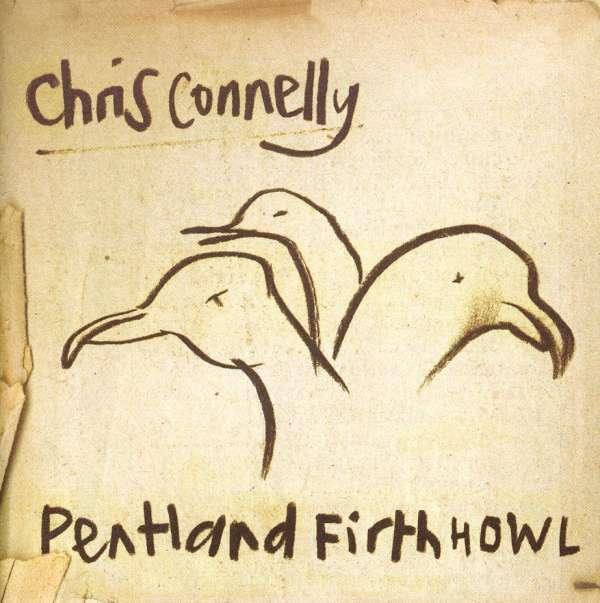
MW: There are two songs on BLOODHOUNDS that are covers of your own songs—”AAISW” and “F-birds” were originally on Pentland Firth Howl. I noticed that the emotions in these songs are very different from the original, for instance, “AAISW” on Pentland sounds almost apologetic, whereas the new version sounds almost defiant. Did you think about this difference as you were recording? Do you feel differently about songs you wrote many years ago?
CC: I actually rerecorded all of Pentland [Firth Howl] as an exercise. I have been doing that recently for the sole purpose of perhaps — as you suggest — viewing the song, or let’s say the object, from a different perspective. “AAISW” is “An Accident in Scottish Wilderness” and the inspiration, the idea of a car accident in a remote moor, on a winding road, something so incredibly violent happening in this void where no one will be aware of it, it is surrounded by layers and layers of stillness and silence. I remember when I was young, spending much of my time in the Scottish wilderness, I would play this game in my mind where I would look at whatever huge hill was in front of me, and see a thing of amazing beauty and peace, then I could flip it to become something so forbidding and terrifying. (You may remember one of the pivotal scenes in Ed Royal suggests this, and also in the poetry of my beloved STANLEY ROGER GREEN.)
So, in “Accident” (the one that’s on Pentland), you have the stillness, the suggestion of a threat — it’s daytime, and the space in the music suggests the openness. On the BLOODHOUNDS version, it becomes a lot more tribal, a lot more angry. Some of the perspective is from maybe a person close to the accident victim — “I could kill you for driving, but you thought of that first” — anger that they may have been warned not to drive, but did it anyway. I also wanted to reverse the openness and bring a frenzied anxiety to the song. I deliberately tried to use sounds that were almost shrill and dissonant to suggest what the tires might sound like, etc. at the point of impact.
The other song I chose was “The Fidra Birds”, which originally opened Pentland. The song was inspired originally by the traditional “Sinner Man” (Nina Simone version) where the protagonist might “run to the rocks, the rocks won’t hide you”, etc. So, being the party guy I am, I wrote a narrative about the double suicide of a particularly dour (fictitious) Scottish couple, around the time of Ed Royal, when I wanted to start writing narrative songs (which I did not continue with, I am too cryptic). The new version has the same lyric of course, but the music (informed slightly by “Bau Dachong” by the VIRGIN PRUNES) has a similar tribalism to it, like it’s partner “AAISW”. I also wanted to introduce the sound of mourning which is in the backing vocals. In my mind, I was thinking about these images of Scottish widows on the shore mourning a lost fishing boat — all half-remembered images, but I do find I have this amazing glossary up there and I love trying to match sounds to images, or my voice to images, or to feelings or textures. Again, I know I have talked before about my musicianship being the result of being a crap painter!
MW: How has your writing process changed over the years?
CC: I think there are certain things I do that I learned early on that I still use. I have a box of tricks, a box of tools, but the canvas always changes because I am more interested in trying something kind of preposterous rather than writing another song. I am very much inside myself now: there is a lot more spontaneity to my work these days because I trust myself and I don’t go to anyone to ask if what I am doing is good — it’s unimportant. There is a song on the album called “Farewell to Athens”, which is almost completely written spontaneously, and then it was done — I could not go back and change it, it would have been wrong. It is so much instinct these days, I have made so many fucking records at this point, and it’s always an adventure. Things also really changed for me when I started recording in my own studio, total autonomy.
MW: What do you think sets BLOODHOUNDS apart from other albums you have written?
CC: First of all, BLOODHOUNDS is a very deliberate double album. I had 80 minutes of material and it made sense, I was not going to prune it down and save 40 minutes for next year. This album is sequenced to be listened to in that order as well — I didn’t agonize over the order, but it was a eureka moment when I had “Bloodhounds” at the beginning and “Brush Stroke Blues” at the tail end, everything made sense to me. I also think that it’s the zenith of my lyric writing, I felt extremely motivated and inspired. I also found myself in this absolute treasure trove of imagery up in my own mind, I kept hearing things, and seeing things and feeling things and my pen kept moving. I think maybe it’s the end of an era for me that started with NEW TOWN NOCTURNES. When I say end, I can only hope that things will change and go in another strange direction.
MW: Tell me about the really cool, dark cover art. I think you look like a demonic Bond villain! Does the image have a meaning to you?
CC: That was DERICK SMITH and makeup by KAREN BRODY. We were doing a shoot and I wanted to have a cigarette in the shot — as an ex-smoker, I miss them so much, they were such a huge part of my make up! When Derick showed me the shots, we were not planning an album, but I said, “That’s my next album cover, BAM!!!!” I think it’s strong, I LIKE being a 54 year-old man who wears make up because I think it looks cool, it looks sexy and I think cigarettes are really fucking sexy and I miss them and know that’s not a great thing to say, but I love the charade. Derick is very good at capturing what we all LOVE about rock ‘n roll that just isn’t there anymore for the most part. I think the cover is defiantly rock ‘n roll and I love it.
MW: One of the persistent themes in your work over the years seems to be that of being a stranger in a strange land, a sense of not belonging or searching for a “home” that maybe doesn’t exist. How do you feel about this and how strongly do these feelings affect your writing? Does your writing give you a sense of “home”?
CC: Writing does give me a sense of home because it is my home. Unfortunately I don’t feel at home anywhere else. This is simply an observation — I am a very lucky man, I have not been booted out of Syria or run for asylum from a dictatorship. It’s just that I feel like I left Scotland and should have probably gone back and now it’s too late, I feel like I betrayed it, and I just don’t feel at home in America at all. I think that has a lot to do with why I am a bit introverted and hermetic, I have a very small circle I feel very comfortable with, but that’s just fine. I think this keeps coming up in the writing though, a yearning. The song “A Farewell to Athens” exemplifies this perfectly. (Edinburgh is sometimes referred to as the “Athens of the north”.) It was written spontaneously during a particularly bad bout of homesickness (I get it a lot) and it kind of explores the dilemma: do you miss EDINBURGH or do you miss being a YOUNG MAN in Edinburgh? Are you really homesick or just nostalgic? It’s a conversation I should have with my friends who stayed there. Sometimes I’ll drink a few whiskys and blurt out, “I SHOULD HAVE NEVER FUCKING LEFT THE FINI TRIBE!!!” and I MEAN it, I really should have stayed, and I know it’s ridiculous to say, but it was a perfect storm of ideas, experience, sex, hedonism, and learning that I never really got again — I suppose like someone who misses college or something. However, if the six original Finis could find some common ground, I would do it in a heartbeat — I love them all and cherish what we learned together.
MW: I pick up on a sense of passion and/or urgency on a lot of these songs. Although it’s not as stripped down as some of your other work, there is a real feeling of emotion in these songs. How do you balance letting these emotions show without covering them up with the power of the music?
CC: Well, like I said earlier, part of the FUN of what I do is trying to find sounds and notes and chords that reflect what I am saying. I have used this before in an interview but years ago, someone gave me a cassette of the album “AGUAS DE MARCO” by Antonio Carlos Jobim and — I think it was right when I was doing SHIPWRECK — I felt such an amazing emotion from a song that was being sung in a language I did not understand. Actually BOWIE pointed out the emotion expressed in music YEARS before voices and words were being used in classical composition.
BLOODHOUNDS is an emotional album, and it explores, I think, emotions that are on the level of a person my age as well, using a body of experience to contextualize the feelings, which because of that experience are more subtle and maybe more urgent. I am so much more aware of mortality, because of my age, priorities are different, I cling to youth, try to stay healthy — stuff many people my age do — but at the same time, I keep getting these inexplicable waves of vitality. I live in the moment, or at least I try to.
MW: What is your favourite song on the album and why?
CC: That’s hard: I will say “Bloodhounds” because it was born out of a bad, bad situation. I created something very positive out of something very negative, and realizing I COULD do that made me feel that all was not lost.
Chris’s 20th album, The Tide Stripped Bare, is available today from Armalyte Industries. The limited edition CD is sold out, but you can still get the digital download from any of the following:
Chris’s 20th solo album, The Tide Stripped Bare, will be released on Friday, February 26, 2018 by Armalyte Industries.
A limited edition CD with autographed Polaroid image (150 copies), as well as digital download formats, are available for pre-order and the first track, “Another Song About A Painting”, is available now on Bandcamp. You can also experience the title track, “The Tide Stripped Bare”, via this exquisite video by Gabriel Edvy.
As Chris prepared for the release of his new album, I grilled him on all the details I could get for “The Tide Stripped Bare”, his first release of 2018, his 20th solo album, and our third interview together.
Megan Walters: First of all, congratulations on your newest album! The name of the album itself — The Tide Stripped Bare — happens to sound a lot like the name of a Bryan Ferry album, “The Bride Stripped Bare”, which in itself is a reference to an artwork by Marcel Duchamp. Was this a deliberate nod to either artist?
Chris Connelly: Absolutely: I adore Bryan Ferry and, of course, Duchamp, and I see some definite lineage between the two… so, in a fit of absolute egomania, I added myself to that lineage! But seriously, the sculpture alludes to masculine and feminine relationships, as does Ferry’s album (which he made after breaking up with Jerry Hall) and I have always dealt with these relationships in my lyrics. Although the substitution of the word TIDE for BRIDE which opens up the more allegorical side of the album and my own romantic relationships with the unattainable, it hearkens back to something I mentioned before in that I create backdrops for my songs, like the background in a painting, I spend as much time fixated on the use of words and sound to create the context of the song.
MW: Speaking of Bryan Ferry, the first song “Another Song About A Painting” has a definite glam rock feel to it. Does this mean you were influenced by glam rock while you were making this? Do you have an idea of what you want your songs to sound like before they are finished, like “I am going to do a glam rock song”?
CC: No, I never have a vision, maybe a melody and the traces of words, but that song went through a lot of changes before it became what it is. When I finally delivered it, it happened really fast and in a sense it was the comedy of the words and the references AGAINST a very glam rock backdrop that appealed- if you listen to the words, it’s sort of referencing all these centuries old paintings by people like Constable of farm labourers and pastoral scenes all colliding with each other. At the end I start yelling out artist names off the top of my head and it’s a direct reference to the outro of “Elected” by Alice Cooper- so you are bang on the money about glam, which has been one of the backdrops of my life for ages.
MW: Why did you decide on this name for your album? Do you have a list of cool album names in your head or do you choose the name based on the material you’ve written?
CC: These days the titles come to me, and usually I can’t start writing or don’t start writing until I have a title, and it has to really grab my attention. Both works of art The Tide Stripped Bare have been woven into the fabric of my life for decades and it’s just something my brain threw up when I was playing word games in my head, and it seemed like such a perfect “Chris Connelly” album and song title. It was then that I started writing the title track, the tide going out is like water stripping water stripping water, the ocean undressing itself. It’s both sexy and in a metaphorical way revealing of truths, stripping away of artifice, and when the tide is out we ourselves can wander further out into an expanse.
The song itself looks at this, and it also deals with two souls who maybe friends or lovers being able to confront certain truths both good and bad in an arena without distraction (the empty beach). The fact that the water is shallow the further out they walk (the “ankle deep affair” written about in the chorus) suggests that perhaps a commitment is elusive for both, but like many things I write, I leave it open ended for those listeners who may need a happy ending.
MW: “Tide Stripped Bare” is yet another reference to water — you have done Ultimate Seaside Companion, Shipwreck, Pentland Firth Howl, Stowaway… do you intend to have these recurring themes or does it just make for good lyrics?
CC: Yes, I come back to it. I grew up near water and spent a lot of time there, actually. Reading this question makes me think it’s an easy cheap shot, any dipshit poet can wax lyrical about the fucking ocean, but all of the titles above explore different aspects. The sea is just the canvas and the backdrop really.
“Shipwreck” was suggested to me by Bill Rieflin as the title for the album and I really grabbed the ball and ran with it. Of course, he suggested it to me as my life was a bit of a shipwreck at the time — it’s funny that something as beautiful came out of what was a very ugly and self destructive time in my life. But if there is no tangible beauty in my life at any given moment, if there is nothing good, my mind will create these incredible vistas for me to dwell in, and out of this will come some kind of creative outburst inevitably. It’s all checks and balances, really, isn’t it?
MW: This marks the second time you have covered a song by Scottish post-punk band Visitors— what is it about Visitors that brings you back again?
CC: Third, if you count “Drug a Bug” by Cocksure — which basically samples a Visitors song and loops it. Visitors were my mentors, their music, their approach and creativity still resonate with me strongly to this day and I feel like I have so much to thank them for. I love their music and know it well and I wish it were more widely available. In a sense, I am on one hand recording these songs for my own indulgence and on the other hand, I want others to hear them and explore.
In their short existence they never made an album, but they went through so many incredible creative changes and became more and more obtuse as that short time went by, it was kind of overwhelming for me. They were the ones who played a different set each time, who played different instruments each time and were a huge influence on the way the Fini Tribe worked.
MW: What was this album like to make? Are some songs or albums more difficult to make than others and why?
CC: I made it at home, as I do all of my records now. It was a wonderful, if protracted, experience. Some of the songs I worked and reworked, and some were very quick, the writing took no time. It was really the expression of the music I had the most questions about, but it was a lot of fun, and I was by myself. When I first started making records, when I was a kid, and many of my peers will attest to this, going into the studio was a big deal. It meant planning, it often meant saving money (or any other illicit means), rehearsing, endless discussions because it was your “shot” — if you blew it, the meter is running and you still have to pay. So I grew up in that environment. Now we are seeing the opposite of that and I think it is a lot more zen. I don’t build up any kind of importance — the work happens when it happens, if something wasn’t happening, if a song felt wrong, I could leave it and come back to it — any kind of self-importance is diminished and it becomes all about the work, and never really about the finished product. I write and record when I feel like it, and eventually there is an album, ta dah!
What’s interesting to me is that these methods are changing the way I write, not necessarily on “The Tide Stripped Bare” but perhaps a little on the track “Ophelia Moment”. I can see part of me focusing on a real structure — and never a traditional structure, a unique structure for that song — and also a very loose “non” structure as well. I have been writing these pieces for the next album that contain both these elements, structure along with a lot of almost improvisational lyrics, and whereas I may have worked them a little more in the past, I am now inclined to leave them. I feel like there is this automatic writing coming out of my own method.
MW: So now that you no longer have that sense of urgency or as much worry about money spent on pro studio time or making your “shot”; does having more time or being more comfortable create different songs than it used to? Do you think there might be something great about restrictions or parameters in a creative process that you won’t get from how you are currently working?
CC: I have always worked better with restrictions. For years and years I shunned any kind of home recording in favour of my beloved handheld cassette recorder. I was always afraid that anything else would detract from my writing process. I found out at a very young age — and absolutely no disrespect to Al or Paul (who I worked with in Ministry) but when I first joined (and this was not just them, it was a trait of recording in the 80s) they took forever to do anything, and I thought, “Well, that’s the way it is.” But it was ridiculous, and that’s the reason I finally left: because I was bored. Ultimately I realized I needed to A: do what pleased me, and what I thought sounded good and B: having these tools at my fingertips actually augment the songwriting process, or present another dimension after the basic melody is written, and the sketch of the lyrics are written. (I did not make this realization until I was around 50.)
I still have restrictions, I have a lot going on in a very full life and I do not have dead time at all really, so I do not have endless hours to kill looking for the perfect guitar sound or whatever, so I really go with my gut on everything, and I am usually right. If something seems to be not right, I can go back and change it, and I have done this quite a few times — if something is nagging at me, I don’t have to call the studio and book time to fix it, I can do it when I get a spare minute. My creative process is and has always been fairly spontaneous, it’s almost the only area of my life where I do not second guess myself, and it’s a huge and very solitary part and that’s the way it’s got to be, I suppose.
MW: Tell me about the cover art—does it have a particular meaning to you and do you think it’s important to make the art for your own albums sometimes? Is there a difference to you whether you make your album art vs anyone else?
CC: No, it seemed right for me to do it. I have this creative game I like to play where I have a huge bag of old magazines, a glue stick and some paper: the game is that you have to use your fingers (no scissors) to tear magazine pages and create a collage, but you only have 2 minutes to do it (these are my parameters, you can make up your own). For TIDE, another prerequisite was that all the pictures I tore from had to be bodies of water or beaches. It’s an exercise in creative flow and it can really change your perspective in real time. For a while there, I would do 4 or 5 in the morning after recording and before waking the kids up.
MW: You have various characters that appear in some of your songs, some real like the folk singer Jackie Leven in “Jackietown” and some fictitious — presumably the Ophelia in “Ophelia Moment” was taken from Shakespeare. Are most of the characters in your songs based on real people in your life or are they mostly fictitious? What are some good examples of real vs made up characters in your work?
CC: “Jackietown” is an example of something I do fairly infrequently: a song about a real person. But Jackie’s music and words are so precious to me, I needed to write it, and it’s not the first time — the song “To Swing From the Air” on Decibels From Heart is for him, as well as the song “The Ultimate Seaside Companion”, which is not necessarily about him, rather a nod to his style. “Diamonds Eat Diamonds” from the album Blonde Exodus is written for Billy Mackenzie, and then there’s “Julie Delpy”, of course…
Most of the characters in my songs are hybrids of both real and fictitious people, kind of like the characters that populate my novel Ed Royal. Some of the peripheral characters are real, because they are so peripheral it doesn’t matter, but the principal characters are made up, in songs they are basically hired guns, actors I have hired to carry things from one end of a song to the other, to walk around the buildings I built and walk the beaches I make, or to create dynamic with other characters.
You mentioned “Ophelia Moment” — this was inspired by the idea of gaslighting: telling someone or orchestrating situations to suggest to someone they are mad (in this case a female) when they are not, which kind of refers to the idea that (in my opinion) Hamlet was subconsciously trying to make her go mad deliberately. I have seen this kind of (male) behaviour, or at least heard about it first-hand and it’s something to be aware of, a predatory weakening of the female by wearing them down.
MW: How easy is it to “switch” creative personas? Could you be writing your own songs while in the midst of Bowie season?
CC: I do. The inhabiting of David Bowie requires a very different intellectual strategy than songwriting. It requires researching and playing a part, which takes an enormous amount of energy, but not the type of creative energy I use for songwriting. It requires stepping into my idea of what the character of Bowie may be, and it may be my romantic notion, so it’s quite personal.
MW: You played your first solo show in a decade last year — any interest in doing more solo performances?
CC: It’s always possible… It was fun and, if nothing else, I have amassed a staggering amount of songs over the past 28 years I have been making solo records…